
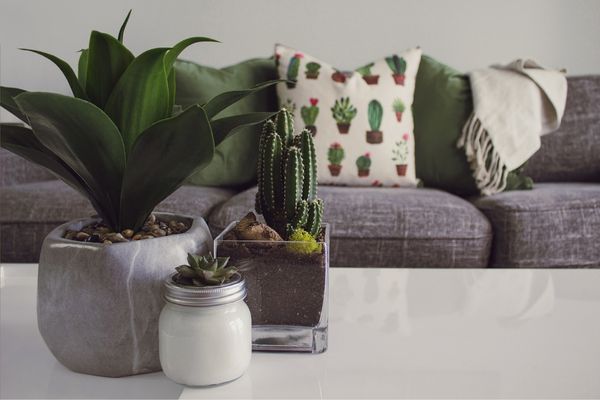
When I first started collecting houseplants, I treated each one like its own little masterpiece. Every plant had its own corner, its own pot, and its own spotlight. While they were all beautiful individually, something always felt missing.
It wasn’t until I began combining plants intentionally that my home truly came to life. Instead of isolated pots scattered around the room, my plants started telling a story together. I discovered that creating harmonious plant arrangements isn’t about owning more plants—it’s about choosing the right ones to complement each other.
Here are the principles I now follow whenever I design a new plant display.
Start With a Focal Point
Every successful arrangement needs one plant that immediately catches the eye.
I usually begin with a larger specimen that naturally becomes the centerpiece.
Some of my favorite choices include:
- Monstera
- Fiddle Leaf Fig
- Bird of Paradise
- Rubber Plant
- Dracaena
Once the main plant is in place, everything else is chosen to support—not compete with—it.
Layer Plants by Height
One trick that instantly makes a display look professionally designed is varying the height of each plant.
Instead of lining pots up in a straight row, I create layers.
A simple arrangement often includes:
- One tall floor plant
- One medium-sized leafy plant
- One trailing plant
- One compact accent plant
The different heights create movement and make the display feel much more natural.
Mix Leaf Shapes Instead of Matching Them
I’ve learned that harmony doesn’t mean everything has to look the same.
In fact, combining different leaf shapes creates much more visual interest.
I love pairing:
- Large tropical leaves with delicate ferns
- Upright foliage with cascading vines
- Rounded leaves with long, narrow ones
- Glossy textures with matte foliage
These subtle contrasts make every plant stand out while still feeling connected.
Keep the Color Palette Balanced
Green may be the dominant color in most plant collections, but there are countless shades of green.
Some plants have deep emerald leaves.
Others lean toward silver, lime, or olive tones.
Occasionally I add plants with burgundy or purple foliage, but I never use too many bold colors in one arrangement.
A balanced palette feels peaceful rather than overwhelming.
Group Plants With Similar Needs
One mistake I made early on was placing plants together simply because they looked good.
Soon I realized that some needed bright light while others preferred shade.
Now I always group plants that enjoy similar conditions.
For example:
Bright locations
- Succulents
- Crotons
- Cacti
- Ficus
Lower-light areas
- Snake Plant
- ZZ Plant
- Peace Lily
- Pothos
This makes watering and maintenance much simpler.
Choose a Theme
Sometimes I build an arrangement around a specific feeling instead of individual plants.
Some themes I enjoy include:
Tropical Escape
- Monstera
- Calathea
- Bird of Paradise
- Philodendron
Desert Style
- Cacti
- Aloe Vera
- Echeveria
- Jade Plant
Kitchen Garden
- Basil
- Mint
- Rosemary
- Parsley
Having a theme makes choosing new plants much easier.
Let the Pots Tie Everything Together
Even completely different plants can look like they belong together if the containers share a common style.
I often use:
- White ceramic pots
- Natural terracotta
- Matte black planters
- Woven baskets
The plants provide the variety while the containers create consistency.
Give Every Plant Room to Shine
One lesson I had to learn was that overcrowding rarely looks attractive.
Plants need room to grow—and people need space to appreciate them.
I now leave small gaps between pots instead of squeezing everything together.
Odd-numbered groupings usually look the most balanced.
Three or five plants often create a more relaxed composition than perfectly symmetrical arrangements.
Think About the Entire Room
Instead of designing one shelf at a time, I now consider how every plant relates to the whole room.
I ask myself questions like:
- Where does my eye naturally go?
- Is one corner too heavy?
- Does the room need more height?
- Would a trailing plant soften this shelf?
- Is there enough empty space?
These small adjustments make the room feel intentionally designed rather than randomly decorated.
Let Your Collection Evolve Naturally
One of my favorite things about decorating with plants is that nothing has to stay exactly the same forever.
Plants grow.
They get taller.
Some begin to trail.
Others need larger pots.
I move them around regularly, experimenting with new combinations until everything feels balanced again.
That flexibility keeps decorating fun instead of stressful.
A Beautiful Display Is Built Over Time
Creating harmonious plant arrangements has taught me that beautiful homes aren’t built in a single afternoon. They’re shaped gradually, one thoughtful decision at a time. Every new plant brings a different texture, color, or personality into the space, and learning how they work together has become one of my favorite creative hobbies. The best combinations don’t happen by accident—they grow naturally through observation, patience, and a genuine love for living with plants.