
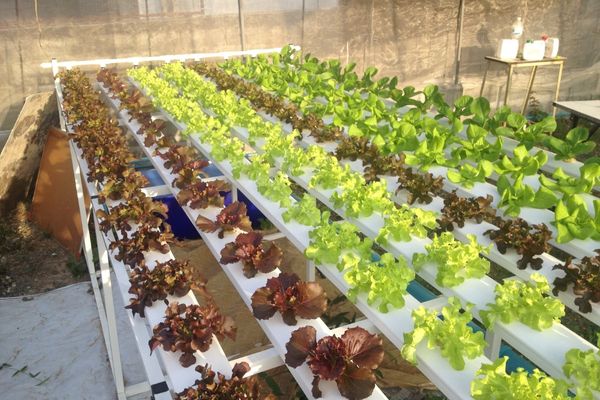
I used to believe that growing healthy plants always meant digging into rich soil.
Every gardening book I read seemed to revolve around improving the soil, choosing the right compost, or fixing drainage problems. Then I came across hydroponics, and it completely changed the way I thought about gardening.
The idea of growing plants without any soil at all sounded almost impossible at first. But the more I learned, the more fascinated I became. Today, hydroponic gardening has become one of the most exciting innovations for gardeners, whether they have a spacious greenhouse or a small apartment.
What Is Hydroponic Gardening?
Hydroponics is a method of growing plants using nutrient-rich water instead of soil.
Rather than drawing nutrients from the ground, the roots receive everything they need directly from a carefully balanced water solution.
The plants are usually supported by materials such as:
- Clay pebbles
- Coconut coir
- Rock wool
- Perlite
These growing mediums provide stability while allowing the roots easy access to water, nutrients, and oxygen.
How Hydroponics Works
Plants need only a few basic things to thrive:
- Water
- Light
- Nutrients
- Oxygen
In traditional gardening, soil acts as the delivery system for many of these essentials.
Hydroponics simply removes the soil and delivers nutrients directly to the roots through water. Since the plants don’t have to work as hard searching for nutrients, they often grow faster and more efficiently.
I found that concept surprisingly simple once I understood it.
Different Types of Hydroponic Systems
One of the things I love most about hydroponics is that there isn’t just one way to do it.
Deep Water Culture (DWC)
This is often recommended for beginners.
The plant roots remain suspended in nutrient-rich water while an air pump supplies oxygen.
It’s simple, affordable, and works especially well for leafy greens.
Nutrient Film Technique (NFT)
In this system, a thin stream of nutrient solution continuously flows over the roots.
It provides:
- Constant nutrients
- Excellent oxygen exposure
- Efficient water use
It’s a popular choice for growing herbs and lettuce.
Ebb and Flow Systems
These systems periodically flood the root zone before draining the water away.
The cycle provides both moisture and fresh oxygen, encouraging strong root development.
Drip Systems
Each plant receives nutrients through small drip emitters.
This method is highly efficient and works well for larger plants like:
- Tomatoes
- Peppers
- Cucumbers
Aeroponics
Perhaps the most fascinating system of all.
Instead of sitting in water, the roots hang in the air while being misted with nutrient solution.
This gives them exceptional oxygen exposure and can produce remarkably fast growth.
Why So Many Gardeners Love Hydroponics
The advantages quickly caught my attention.
Hydroponic gardening offers:
- Faster plant growth.
- Higher yields.
- Less water consumption.
- Fewer soil-borne diseases.
- Efficient use of small spaces.
- Year-round growing opportunities.
It’s amazing how productive a small indoor setup can become.
Water Conservation Is a Huge Benefit
One of the biggest surprises for me was learning how little water hydroponic systems actually use.
Unlike traditional gardens where water seeps away into the ground, hydroponic systems continuously recycle it.
That means:
- Less waste
- Lower water bills
- More sustainable gardening
It’s an approach that makes a lot of sense, especially in areas where water conservation is important.
There Are Challenges Too
Hydroponics isn’t completely maintenance-free.
Because the system is so precise, it requires regular monitoring.
Gardeners need to keep an eye on:
- Nutrient levels
- Water quality
- pH balance
- Oxygen supply
Small problems can develop quickly if they’re ignored, so consistency becomes very important.
The Best Plants for Beginners
If you’re just getting started, it’s wise to choose plants that adapt easily.
Some excellent beginner-friendly options include:
- Lettuce
- Spinach
- Kale
- Basil
- Mint
- Cilantro
Once you gain experience, you can move on to larger crops like:
- Tomatoes
- Strawberries
- Cucumbers
- Sweet peppers
Lighting Is Essential
When growing indoors, proper lighting becomes one of the most important factors.
Modern LED grow lights have made hydroponics much more practical.
They provide:
- Full-spectrum light
- Low energy consumption
- Minimal heat
- Year-round growing potential
With the right lighting, it’s possible to harvest fresh herbs even in the middle of winter.
My Advice for Beginners
If I were starting over, I wouldn’t rush into a complicated setup.
I’d begin with a small system and a handful of easy plants.
Here’s what I’d focus on first:
- Learn how nutrient solutions work.
- Check water levels regularly.
- Monitor pH consistently.
- Keep the system clean.
- Observe your plants every day.
Hydroponics becomes much less intimidating once you gain a little experience.
Is Hydroponics Better Than Traditional Gardening?
After learning about both methods, I don’t think one is necessarily better than the other.
They’re simply different.
Traditional gardening offers the satisfaction of working with living soil, while hydroponics provides incredible efficiency and control.
I actually appreciate both approaches for different reasons.
Sometimes I enjoy getting my hands dirty in the garden, and other times I love watching vegetables thrive in nothing but water and nutrients.
Final Thoughts
Hydroponic gardening proves that healthy plants don’t always need soil to flourish. By supplying water, nutrients, oxygen, and light in a carefully controlled environment, this innovative growing method produces fast growth, impressive harvests, and efficient use of both space and water.
What I love most about hydroponics is how it challenges old assumptions. It reminds me that gardening is always evolving, and there’s always something new to discover. Whether you’re curious about growing herbs on your kitchen counter or dreaming of a larger indoor food garden, hydroponics offers an exciting way to experience the future of gardening while staying connected to the joy of growing your own plants.