
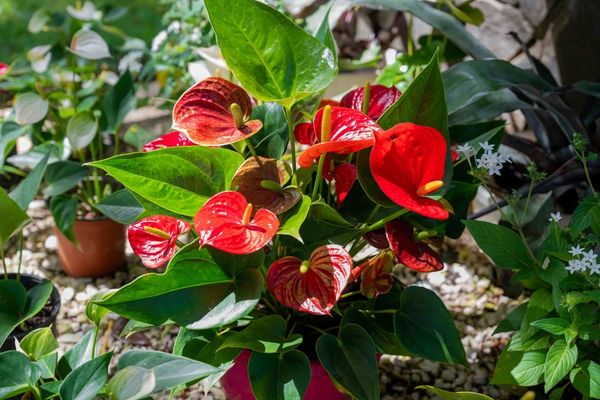
I used to think I had seen every kind of plant there was.
After all, I was familiar with roses, orchids, succulents, and a handful of tropical houseplants. But the deeper I ventured into the world of gardening, the more I realized that nature has created plants so unusual they almost seem fictional.
Some smell like decaying meat. Others survive in scorching deserts for centuries. A few can trap insects, while others bloom only once every several years. Exploring these botanical wonders has become one of my favorite parts of learning about plants.
Here are some of the most fascinating rare and exotic plants from around the globe.
What Makes a Plant Rare or Exotic?
Not every unusual-looking plant is considered rare.
A plant may be classified as rare because it grows naturally in only one small region or because very few individuals remain in the wild.
Exotic plants, meanwhile, are often species that are unfamiliar outside their native habitats and possess striking characteristics that make them stand out.
Many rare plants face serious threats from:
- Habitat destruction
- Climate change
- Illegal collection
- Invasive species
Protecting these remarkable species is essential for preserving Earth’s biodiversity.
The Corpse Flower: Famous for Its Unforgettable Smell
The corpse flower is probably one of the most talked-about plants in the world—and not because it’s beautiful.
Native to the rainforests of Sumatra, this enormous flowering plant releases an odor that closely resembles rotting flesh.
As unpleasant as that sounds, the smell serves an important purpose.
It attracts beetles and flies, which help pollinate the flower.
Even more remarkable, the plant may bloom only once every several years, and each bloom lasts just a few days. That’s why botanical gardens often attract huge crowds whenever one flowers.
Venus Flytrap: Nature’s Tiny Hunter
The first time I saw a Venus flytrap close its leaves, I couldn’t believe it.
Unlike most plants, this carnivorous species supplements its nutrients by catching insects.
Tiny trigger hairs inside each trap detect movement. When an unsuspecting insect touches them several times, the trap snaps shut in a matter of seconds.
This extraordinary adaptation allows the plant to survive in nutrient-poor soils where other species struggle.
Sadly, wild populations are much smaller than many people realize, making habitat conservation increasingly important.
Welwitschia: A Desert Survivor
If resilience had a mascot, I think it would be Welwitschia.
Native to the Namib Desert in southern Africa, this remarkable plant grows only two leaves during its entire life.
Those same leaves continue growing year after year, sometimes for well over a thousand years.
Instead of relying on rainfall, Welwitschia gathers moisture from coastal fog, allowing it to survive in one of the harshest environments on Earth.
It’s a perfect example of nature adapting in extraordinary ways.
The Ghost Orchid: Beautiful and Elusive
Few flowers have captured my imagination quite like the ghost orchid.
Found in parts of Florida, Cuba, and the Caribbean, this rare orchid has no leaves. Instead, its roots perform photosynthesis while delicate white blooms appear to float mysteriously in midair.
Its beauty is matched by its difficulty.
Ghost orchids are extremely sensitive to changes in their environment and are notoriously challenging to cultivate successfully.
Spotting one in the wild is considered a special experience for many nature enthusiasts.
Rafflesia: The World’s Largest Single Flower
People often confuse Rafflesia with the corpse flower, but they’re actually different plants.
Rafflesia produces the world’s largest individual flower, sometimes measuring over three feet across.
Even more surprising, it has:
- No leaves
- No stems
- No true roots
Instead, it spends most of its life hidden inside the tissues of another plant before suddenly producing its enormous bloom.
Like the corpse flower, it emits a strong odor that attracts pollinating insects.
Its dependence on specific host plants makes it especially vulnerable to habitat loss.
Dragon’s Blood Tree: A Living Umbrella
The dragon’s blood tree almost looks like it belongs on another planet.
Growing naturally on the isolated island of Socotra near Yemen, its umbrella-shaped canopy creates one of the most recognizable silhouettes in the plant world.
Its name comes from the deep red resin produced when the bark is cut.
Historically, that resin has been used for:
- Traditional medicine
- Dyes
- Varnishes
- Artistic materials
Today, climate change and grazing animals threaten many of these unique trees.
Why Rare Plants Fascinate Us
I think these unusual plants remind us that evolution never stops surprising us.
Each one has developed incredible adaptations to survive its environment, including:
- Capturing insects
- Producing powerful scents
- Living for centuries
- Surviving extreme drought
- Depending on highly specialized pollinators
They demonstrate just how creative nature can be.
The Importance of Conservation
Many of these extraordinary species exist only because their ecosystems remain intact.
When forests disappear or habitats become fragmented, rare plants often have nowhere else to go.
Conservation efforts help protect them through:
- Botanical gardens
- Seed banks
- Protected nature reserves
- Scientific research
- Habitat restoration
These programs ensure future generations will still have the opportunity to admire these remarkable species.
Can You Grow Exotic Plants at Home?
Some exotic plants adapt surprisingly well to home gardens.
Carnivorous plants like Venus flytraps can thrive with proper care, while many unusual orchids and tropical species are available from responsible growers.
Others, however, are best appreciated in botanical gardens or in their natural habitats, where they can continue playing their important ecological roles.
Whenever possible, I always recommend purchasing plants from reputable nurseries rather than collecting them from the wild.
Every Plant Has a Story
Learning about rare plants has completely changed the way I see gardening.
Instead of thinking only about flowers and foliage, I now appreciate the incredible journeys these species have taken through evolution.
Whether it’s a desert survivor that’s older than many civilizations or a flower that blooms for just a few days after years of waiting, each one tells a story of adaptation, resilience, and survival.
Final Thoughts
Rare and exotic plants showcase the astonishing diversity of the natural world. From giant blossoms with unforgettable scents to mysterious orchids, carnivorous hunters, and ancient desert survivors, these species reveal just how inventive evolution can be. Their unusual appearances are only part of what makes them special—their survival strategies are equally remarkable.
The more I discover these botanical treasures, the more I appreciate the importance of protecting them. Every rare plant represents a unique chapter in Earth’s story, and preserving them means ensuring that future generations can continue to marvel at the incredible creativity of nature.